Historical Latte Stone


Here is a picture of what the Latte Stones are assumed to have looked like 'back in the day'

Shoichi Yokoi- A Secret Life in a Cave

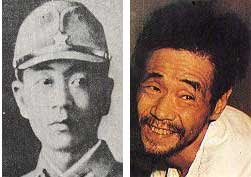
Here is a picture of Yokoi in 1944 (on the left), when he was first going to Guam. On the right is a picture of Yokoi after living in the jungle cave for 30 years. This picture was taken in 1972.


Like I explained before, Japan attempted to take over Guam in World War II. During this invasion, Shoichi Yokoi, a Japanese soldier was sent to Guam, hid in fear in a Guamanian Jungle Cave. Yokoi contined to live in the cave for 28 years! Can you imagine, being isolated all alone for 28 years? I definately can't! Yokoi made a life in his cave, using native plants to form clothes, bedding, and storage implements, which he carefully hid in his cave. He also hunted at night, while there were no islanders out. He feared that if he was found, he would be treated harshly by the Chammaro people, in return for the way the Japanese mistreated them. In 1972 he was found by two island men and forcefully brought out of the jungle to get help. He knew from a leaflet he found in 1952 that the war was over but never gave himself up because "we Japanese soldiers were told to prefer death to the disgrace of getting captured alive." When Yokoi was brought back to Japan, he immediately became a celebrity, got married, and was given 300 dollars. Not all that bad for a caveman!

Whats different from our American states and our American Province, Guam?


When asking a Chammaro person who has lived in the U.S. and Guam what is significantly different from our culture and theirs, a few valid points are made. First off, everyone in Guam lives in a village rather than towns, cities or states in the U.S. Many natives ( native, meaning living their entire life on the island-born and raised) have never even heard of a freeway. Their main road, that leads to most villages, is similar to one of our residential streets. Each month, every village has their own fiesta which is a major part of their culture. More time is made for the family in Guam than in the states. It is said that Guamanians make more time for family, despite having busy lives. Every Sunday, families gather and BBQ, mostly on the gorgeous beaches. Its to bad most of us in the states get so caught up in work, chores and our 'to do' lists and forget about what is really important; enjoying life.

Basic Culture


The Chamorro culture is known for their dances, sea navigation, unique foods, and games. Songs and fashion have been influenced by people from other lands. The Chamorro culture has many complex social protocols centered upon respect. Some examples are kissing the hands of their elders, passing of legends, and chants. They are also masters of canoe making, belembautyan making (a musical instrument), sling stone making, weaving, manufacturing of spears, and other tools. The Chamorro culture includes the preparation of medicine and asking their ancestors for permission when entering the jungle. Chamorro culture is based around a mix of respect, caring, and accepting and helping one another. "Inafa'maolek", or interdependence, is a very central and important value in Chamorro culture, and depends a lot on cooperation. A historian, Lawrence Cunningham said, "In a Chamorro sense, the land and its produce belong to everyone. This is the armature, or core, that everything in Chamorro culture revolves around".